Games User Research
edited by Anders, Drachen, Pejman Mirza-Babaei, & Lennart E. Nacke
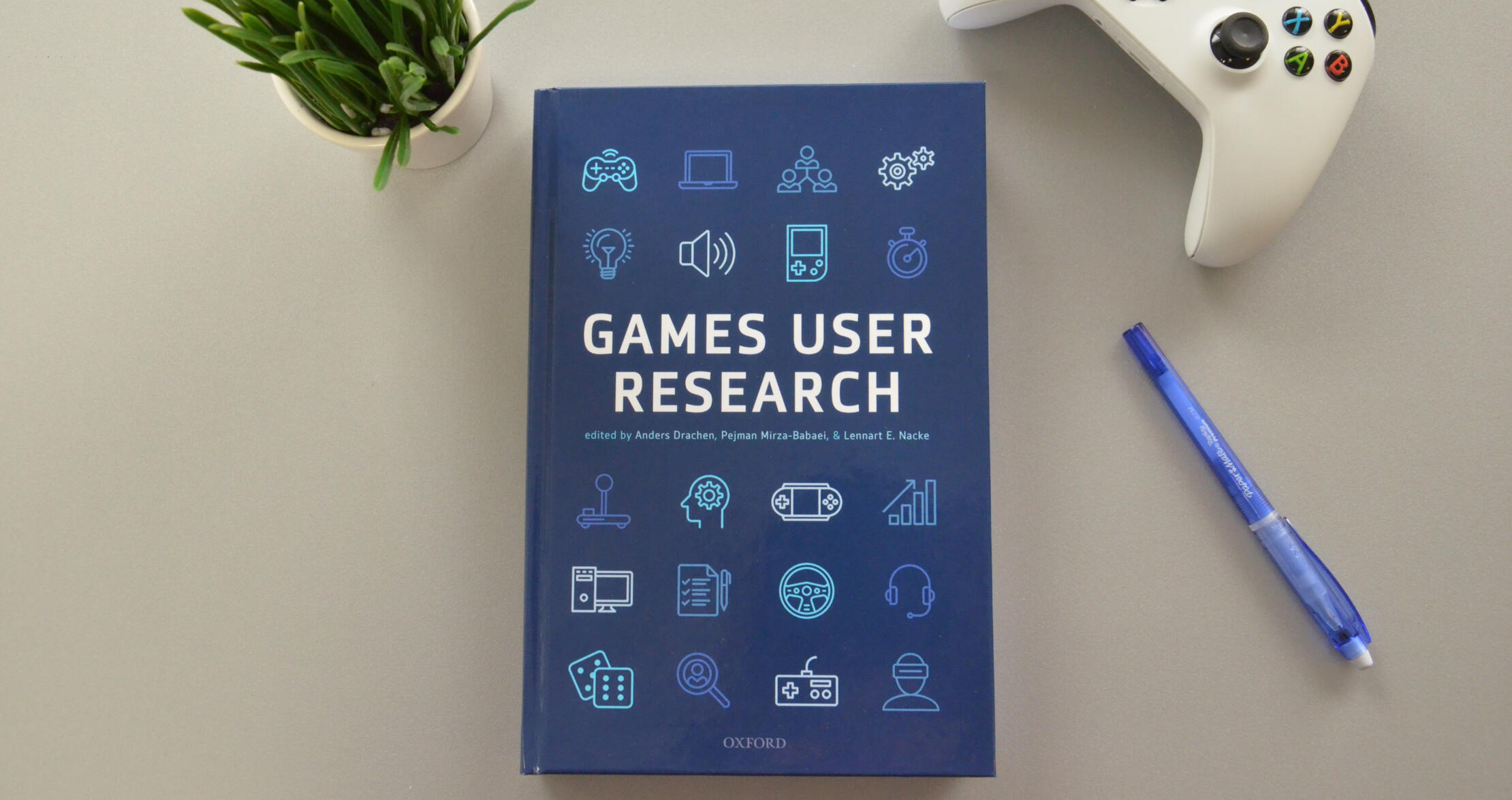
Presenting Games User Research
A Holistic, Community-Driven GUR Ecosystem
Games User Research is not just another book on how to do generic UX for games. It’s a thoroughly detailed GUR Practitioner’s Strategy Handbook: The first unified, authoritative guide edited and contributed by leading industry experts and academics. Here’s what makes it uniquely indispensable:
Holistic Scope: From setting up GUR processes and labs, to mastering individual methods, to learning from real-world case studies—this book guides you from Day 1 of planning research to post-launch evaluation and UX maturity.
Community-Vetted Expertise: Dozens of professionals from EA, Ubisoft, Sony, Valve, Quantic Foundry, IGDA SIG, and top academic institutions share their hard-won best practices. No single author’s perspective—this is the distilled wisdom of an entire GUR community.
Integrated Ecosystem: Learn how to combine analytics with qualitative insights, implement iterative testing (including RITE), and craft actionable reports that developers actually use. You’ll see how GUR intersects with design, art, programming, and business goals, creating a shared language around player experience.
What You'll Learn (And What You'll Gain)
Part I: Games User Research in Production
Features
Strategic Integration. Learn how to embed GUR into every stage of your project—concept, pre-production, production, and post-launch.
UX Maturity & Lab Setup. Discover how to assess your studio’s GUR readiness, establish a testing lab, and scale research practices across teams.
Post-Launch Research. Understand how to gather ongoing player feedback after release, identify emerging UX issues, and prioritize updates based on data.
Benefits
Build a sustainable GUR practice that earns stakeholder buy-in.
Avoid late-stage surprises by spotting usability problems early.
Guarantee that research becomes an integral, respected part of your pipeline and not a one-off checkbox.
Part II: A Detailed Method Toolkit
Deep Overview of GUR Methods
Surveys, Interviews, and Observation
Think-Aloud & Heuristic Evaluations
Rapid Iterative Testing of Experiments (RITE)
Biometric Measures
Game Analytics Applied to GUR
So you can...
Choose the right method for any research question. Whether you’re validating a new mechanic or analyzing post-launch player drop-off.
Save time and budget by avoiding ill-fitting research approaches.
Translate raw data into actionable design recommendations that resonate with developers and producers.
Part III: Case Studies & Examples
Focus Topics
Indie-Friendly Research. "Punching Above Your Weight" and "Affordable Indie Research" chapters show you how to get robust insights even on a shoestring budget.
Specialized Scenarios. From "Players with Special Needs" to "VR Simulation Sickness" and "Mobile Games in Context," explore challenges unique to different platforms and audiences.
AAA Studio Examples. Learn how Dragon Age: Inquisition’s GUR team tackled usability puzzles, and how top studios integrate analytics, biometrics, and qualitative research into blockbuster workflows.
It'll help you...
Ground your learning in real-world success stories (no theory vacuum).
Gain confidence in tackling niche challenges (e.g., testing VR comfort, designing for accessibility).
Understand how seasoned professionals overcame constraints and convinced stakeholders with compelling evidence.
What Your Peers Are Saying
“Games user research has come a long way in the last 2 decades, and this book is a testament to that progress. With chapters on lab setup and recruiting all the way to doing research on VR, this book covers it all. It will be a great resource for those getting into the field as well as industry veterans. I can confidently say that if you are involved in games user research there will be something of value to you in this book.”
— Bruce Phillips, PhD, Xbox Research at Microsoft
“Game user research is a vital part of game development, but getting a handle on how to work with players to improve the game experience can be challenging. This book is loaded with wisdom from dozens of professionals across industry and academia, and provides an invaluable resource on how to build the best strategy for user research.”
— Ian Livingstone CBE, Chairman, Sumo Digital
Transform Your Game Development with Data-Driven Player Insights
Stop flying blind. Every day you rely on gut feelings and ad-hoc feedback, your game risks launching with frustrating usability flaws, low retention, and wasted effort. Games User Research is your one true strategic guide that takes you from guesswork to systematic, player-centered design. So you can confidently build games that thrill your audience and elevate your studio’s reputation.

Why You Can't Afford to Ignore Games User Research
You're Afraid of Critical UX Flaws. You know that even a single frustrating interface or unclear progression can tank reviews and chase players away. Without a clear process, you’re left “flying blind,” wondering what players really want—and fearing the worst when your game goes live.
You're Overwhelmed by Method Overload. Should you run a survey, conduct think-aloud sessions, or integrate analytics? Which tool fits your budget, studio size, or development phase? Without guidance, every method feels risky, and every data point could be misleading.
Your Stakeholders are Skeptical & You Have Limited Resources. Your team may view user research as a “nice-to-have” rather than a business-critical investment. Executing half-baked testing or late-stage surveys wastes time and yields no actionable insights, fueling doubt instead of building trust.

Imagine instead that you can present player data to stakeholders, identify core usability issues before they become viral nightmares, and iterate rapidly; all while building a culture where player insights drive every key decision in a game's development. That’s the promise of Games User Research.
Praise & Endorsements of the book
“The Games User Research book gathers a broad spectrum of methods from the perspective of experts from both industry and academy. It will no doubt prove valuable to anyone interested in getting up to speed on this important topic.”
— Katherine Isbister, Professor of Computational Media, UC Santa Cruz and author of Game Usability
“If you have an interest in understanding the science of interaction design in games, just read this book.”
— Mike Ambinder, Experimental Psychologist, Valve Corporation and Affiliate Assistant Professor, University of Washington
"So many books, so little time: this is the must read for anyone in industry working on gameful experiences."
— Regina Bernhaupt, Director User Experience Research, Ruwido Austria GmbH
“Over the last 15 years, game user research has evolved into a distinct and innovative field, spearheading methods like data analytics or biometrics. Yet researchers and students in HCI and games had no easy entryway into this body of work—until now. Games User Research is poised to become the reference handbook and default textbook of the field: comprehensive, succinct, and accessible.”
— Dr. Sebastian Deterding, Reader, Digital Creativity Labs, University of York, UK
Games User Research is the authoritative, community-driven guide you need. Whether you’re just starting or looking to deepen your expertise.
Who Should Read This Book?
Aspiring GUR Practitioners. If you want a clear, step-by-step roadmap from method selection to execution, this book hands you the tools.
UX Professionals Transitioning to Games. Gain game-specific insights that general UX texts can’t provide. Learn how player motivations and engagement differ from productivity software.
Game Developers & Designers. Whether you’re at a AAA studio or an indie team, learn how to champion player experience, make data-backed design choices, and avoid costly post-launch mistakes.
Buy the Print Edition at Oxford University Press. Now only $39.90 (30% off)
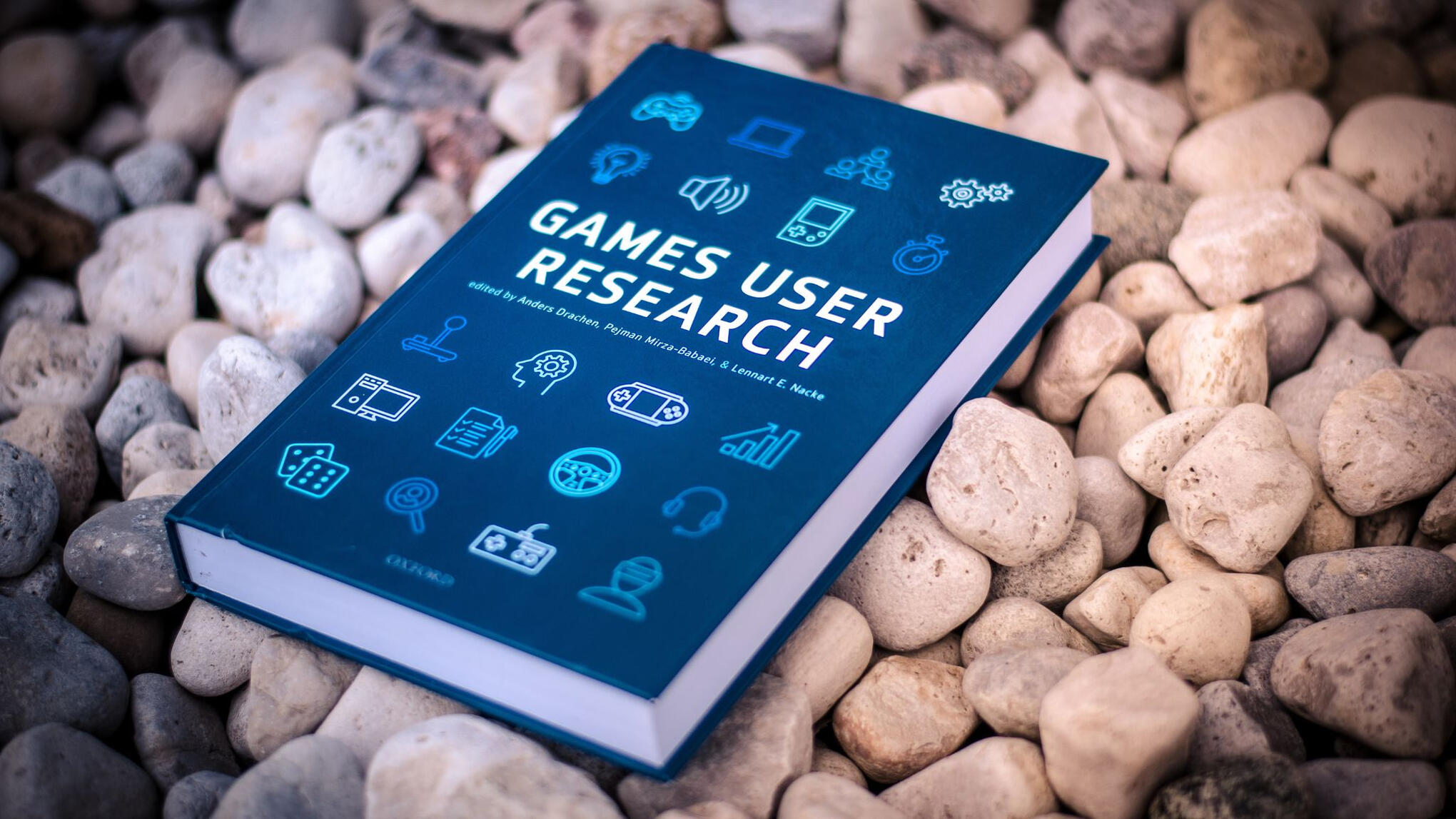
At less than $40, you’re investing in a resource that can save you tens of thousands of dollars and countless hours by identifying UX issues early, convincing stakeholders with data, and delivering games that players love. The cost of inaction? A launch littered with negative reviews, low retention, and expensive post-mortem patches.
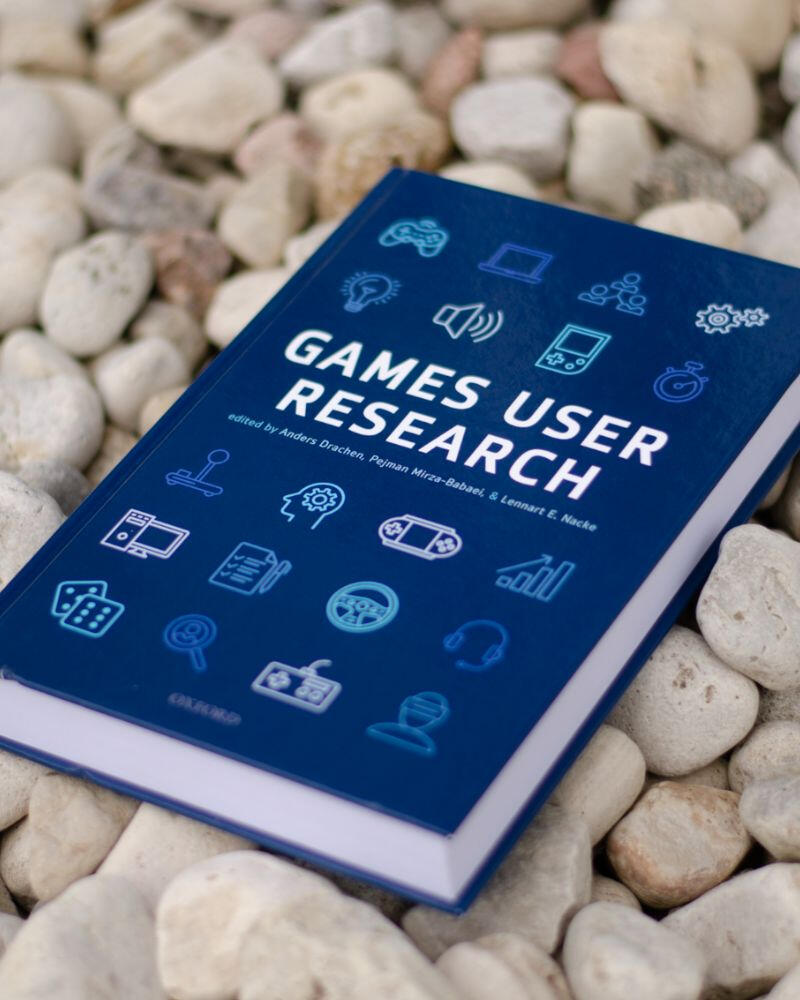
Reviews
The texts are well written and understandable and provide insights into the development processes of larger companies (EA, Ubisoft, etc.).
For me as a newcomer to the GUR area, this is currently my "Bible" where I look up everything.
The references and resources at the end of the chapters are also very helpful.


About The Editors
Anders Drachen

Anders Drachen, Ph.D. is a Professor at the DC Labs, University of York, UK and a veteran Data Scientist. His work in the game industry as well as in data and game science is focused on game analytics, business intelligence for games, esports analytics, monetization, data mining, blockchain for games, game user experience, industry economics, business development and games user research. His research and professional work is carried out in collaboration with companies spanning the industry. He writes about analytics on andersdrachen.com. His writings can also be found on the pages of trade publications such as Gamesindustry.biz and Gamasutra.com. His multiple-award winning research has been covered by international media, including Wired, Kotaku and Forbes. He is one of the most published scientists worldwide on game analytics, virtual economics, user research, game data mining, and user profiling, having authored >100 research publications on these topics. He is also editor of “Game Analytics – Maximizing the Value of Player Data”, a compendium of insights from more than 50 top experts in industry and research, as well as “Games User Research”, the de facto reference for user research across industry and academia. He is a former member of the board of the IGDA SIG on Game User Research. For some reason, sharks have tried eating him three times. He likes ice-cream and has written a book about it.
Pejman Mirza-Babaei

Pejman Mirza-Babaei, Ph.D., is an Associate Professor of User Experience (UX) Research and the Associate Dean Industry Relations at the Faculty of Business and Information Technology. His research and teaching are focused on the design and evaluation of user experience in interactive entertainment systems. He has published more than 50 peer-reviewed articles and frequently speaks at academic conferences and industry events. His research and professional work are carried out in collaboration with companies spanning the industry. He also served as UX Research Director at Execution Labs (Montréal, Canada) from 2015 – 2017 and was a UX Researcher at Vertical Slice/Player Research (UK) from 2009 to 2013. Pejman has worked on pre- and post-release evaluation of more than 25 commercial games including award-winning titles such as Crysis 2, PewDiePie: Legend of the Brofist, and Weirdwood Manor.
Lennart Nacke

Lennart Nacke, Ph.D., is the director of the HCI Games Group and an associate professor for human-computer interaction and game design at the University of Waterloo. He is a world-leading authority on the cognitive and emotional aspects of player experience in video games, with a special focus on physiological metrics and gameful design. He has authored more than 100 research publications on these topics, which have been cited more than 8,000 times. He can be found on LinkedIn, X (@acagamic) , Threads, BlueSky and is also working as a gamification and user experience consultant. He chaired the Computer-Human Interaction (CHI) PLAY 2014 and Gamification 2013 conferences and was the chair of the CHI PLAY steering committee from 2014-2018. He is an editor of multiple research journals and was a subcommittee co-chair of CHI 2017 and CHI 2018 and a full papers co-chair of INTERACT 2019. He has served on the steering committee of the International Game Developers Association Special Interest Group on Games User Research and loves the GUR community. His research group writes articles at hcigames.com, teaches a heuristics course at gameful design, publishes YouTube videos , and they also tweet from @hcigamesgroup. He loves karaoke, chocolate, and beaches, not necessarily in combination.
Book Authors
Contact
Do you have a question about the GUR Book or want to work with us? We'd love to get in touch.
Thank you
Thanks for your message. We'll be in touch soon.